
Water damage to a home or business is common, costly, and often preventable. Non-weather water losses, such as burst pipes, appliance leaks, and toilet leaks, are a leading cause of insurance claims and contribute to an estimated $13 billion in annual losses across the U. S. Water damage can also result from water intrusion and drainage issues that develop over time, including sump pump failures or poor exterior water management.
Whether caused by a sudden plumbing failure or gradual water exposure, these events can lead to expensive repairs and operational disruption. By focusing on preventing water damage, you can help reduce risk and better protect your property.
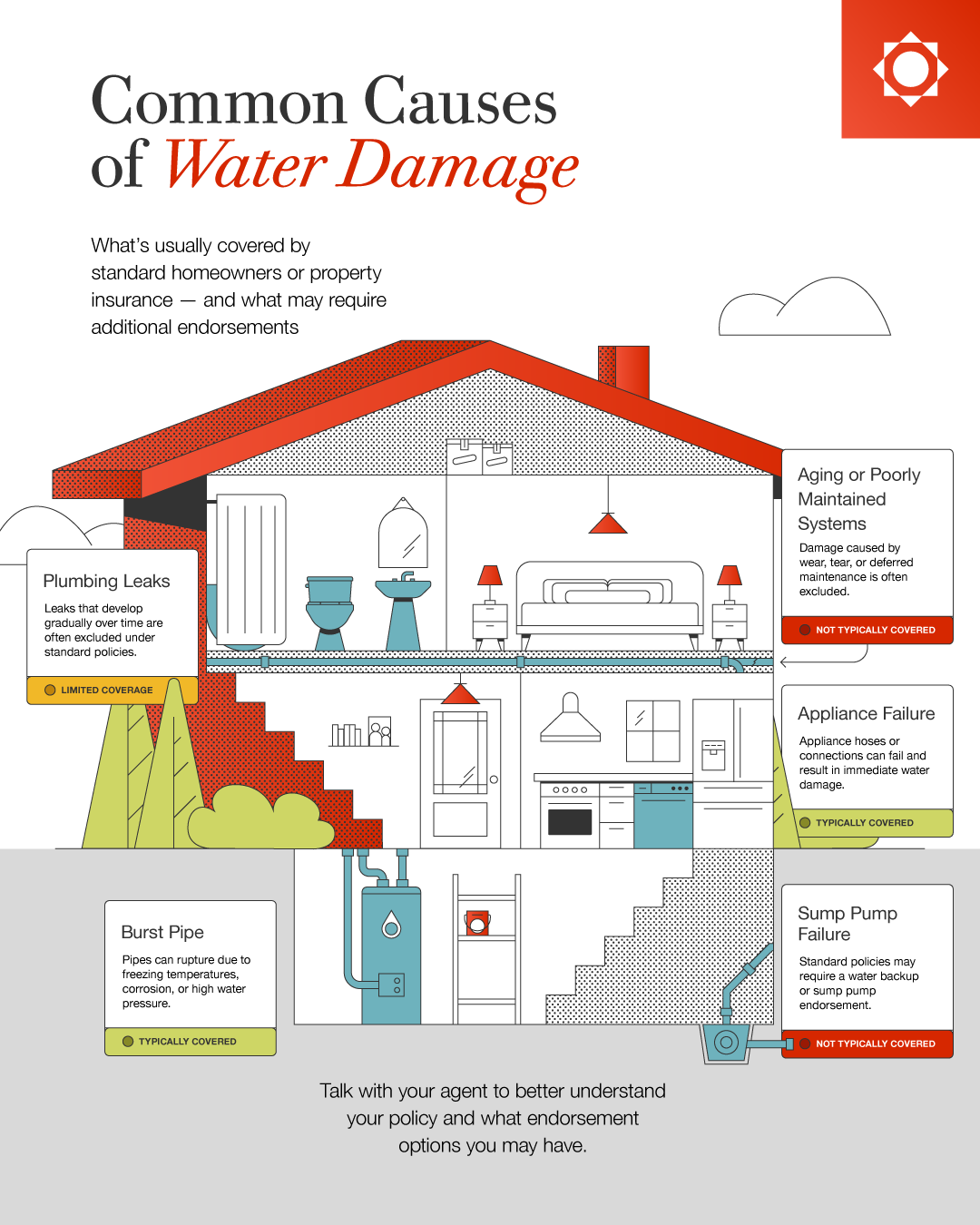
Homeowners insurance coverage for water damage depends on the policy terms and the cause of the loss. In many cases, policies cover sudden and accidental water damage to the home, such as a burst pipe, a broken appliance hose, or a roof leak caused by a storm.
Coverage is typically limited when damage develops gradually or results from a lack of maintenance. Slow leaks, wear and tear, and long-term plumbing issues are often excluded.
Losses related to sewer backups or flooding usually require additional coverage, such as a flood or sewer backup endorsement or inland flood insurance. Because coverage can vary, reviewing policy details and exclusions ahead of time is important. Documented maintenance and water damage prevention efforts may also be helpful when navigating a water damage insurance claim.
Commercial insurance coverage for water damage also depends on policy language, endorsements, and the specific cause of loss. Many commercial property insurance policies cover sudden and accidental water damage, such as a sprinkler pipe that freezes and ruptures during cold weather.
Like homeowners insurance, commercial policies often exclude damage caused by gradual leaks, poor maintenance, or wear and tear. Losses resulting from natural flooding or sewer backups are also typically excluded unless the policy includes additional coverage or endorsements designed to address those risks.
Because commercial properties often have larger, more complex plumbing systems and higher water usage, understanding coverage limitations is especially important. Reviewing policy terms and taking steps to prevent water damage can help minimize both the frequency and severity of losses.
In both homes and businesses, water damage often begins with failures involving the plumbing system or water supply. These issues may develop suddenly or worsen over time. Common sources of water damage include:
Water damage is a leading cause of insurance claims, yet many people do not take basic preventive measures until after a loss occurs. Understanding how to prevent water damage starts with knowing where issues are most likely to occur and taking proactive steps to help reduce risk before problems escalate.
The following water damage prevention tips focus on practical ways to protect your home or business.
Quickly shutting off the water supply during a leak or pipe failure can significantly reduce the extent of water damage. Make sure the main water shutoff valve is clearly labeled and that family members and staff know where it is and how to operate it.
Regular inspections by a professional plumber can help identify early signs of corrosion, wear, or water-pressure issues in pipes, valves, and connections before they lead to leaks or pipe failures. Plumbing inspections are especially important for older properties, where an aging plumbing system may be more susceptible to hidden leaks and breakdowns.
Pipes that are exposed to cold temperatures are more likely to freeze and fail. Insulating exposed pipes helps reduce temperature fluctuations and lowers the risk of a frozen or burst pipe, especially in basements, crawl spaces, and areas along exterior walls. During colder months, disconnecting outdoor hoses and sealing drafts near piping can further support leak prevention and reduce stress on vulnerable pipes.
Appliances and equipment are a common source of water leaks in homes and businesses. Regularly replacing worn hoses, inspecting water heaters for signs of corrosion or moisture, and limiting the use of appliances when unattended can help reduce the risk of leaks.
Toilet leaks, slow drips behind walls, or leaks under floors can go unnoticed for long periods, allowing water damage to develop over time. Checking toilets for silent leaks or running water, watching for stains, damp odors, or unexplained moisture, and monitoring water bills for unexpected increases can all support leak prevention efforts.
A properly functioning sump pump helps reduce the risk of water intrusion, especially during periods of heavy rain. Testing sump pumps regularly, checking backup power sources, and keeping discharge lines clear and directed away from the building can help protect your property from water-related damage.
When gutters and downspouts are not maintained, rainwater can collect near the foundation and seep into basements or crawl spaces, increasing the risk of water damage over time. Regularly clearing gutters and downspouts of leaves and debris helps ensure water is directed safely away from the building.
Many water damage incidents begin as small leaks that go unnoticed until it’s too late. Using a water leak detection sensor helps identify leaks early, making it easier to address issues before they cause extensive damage.
Water leak sensors are typically placed near high-risk areas, such as appliances, toilets, basements, and mechanical rooms. Early alerts support proactive leak prevention and are an important part of understanding how to prevent water leaks in your home or business.
Westfield offers water leak detection solutions in select areas. LeakBot® sensors are available for eligible homeowners in Ohio, Indiana, and Pennsylvania, and the MeshifyTM system is offered for select commercial applications. Please contact your Westfield agent to learn more about these leak detection devices.
Water damage does not have to be inevitable. With greater awareness of common risks, routine maintenance, and early detection, water damage prevention becomes a practical and achievable part of protecting your property. To better understand your coverage options and ensure the right protections are in place, talk with your insurance agent about your specific risks.
